
A dripping faucet is easy to spot. A leak behind a wall, under a slab, or inside a ceiling is a different story. Water can move through a home for weeks or months before any sign shows up on the surface, and by the time you notice a stain, a soft spot in the floor, or a musty smell, the damage has already started. Homeowners and property owners in Calhoun often come to us after noticing a small clue, like a warm patch on the floor or an unusually high water bill, without realizing a leak has been active somewhere they cannot see. That is exactly why non-invasive leak detection in Calhoun, GA has become such a common request for both residential and commercial properties. At Locklear Plumbing, we use tools that let us find these hidden leaks accurately, without tearing into walls or flooring to search for the source.
Below, we cover where hidden leaks tend to form, what they can damage over time, and how modern detection equipment identifies them without guesswork.
Where Plumbing Leaks Hide
Most homes and commercial buildings route water lines through spaces that are never meant to be seen once construction is finished. Supply lines and drain lines commonly run:
Behind drywall and inside wall cavities, under concrete slabs, above drop ceilings or inside ceiling joist bays, beneath flooring in crawl spaces, and inside plumbing chases shared by multiple fixtures.
Once a pipe is sealed inside one of these spaces, a small crack, a failed joint, or a pinhole from corrosion can leak steadily without producing any visible water on a floor or wall surface right away. Water tends to follow gravity and the path of least resistance, so it can travel along a joist, a slab seam, or a wall stud before it ever shows up somewhere you would notice it.
Why These Leaks Are Hard to Catch Early
A leak inside a wall or under a slab does not behave like a leak under a sink. There is no puddle to step in and no drip to hear from across the room. Instead, the signs are indirect:
A water bill that climbs without a clear reason, a section of flooring that feels warmer or cooler than the rest of the room, a faint sound of running water when nothing is turned on, a musty or mildew smell in one part of a room, or discoloration on a wall or ceiling that slowly spreads.
Any one of these signs on its own can be easy to dismiss. Together, they usually point to a leak that has been active for some time.
The Damage Hidden Leaks Cause Over Time
Structural and Material Damage
Wood framing, subflooring, and drywall are not built to handle constant moisture. Prolonged exposure softens wood fibers, weakens the structural integrity of framing members, and causes drywall to swell, crumble, or separate from its paper backing. In slab-on-grade construction, a leak under the concrete can erode the soil beneath the slab, which sometimes leads to settling or cracking of the slab itself.
Mold and Air Quality Concerns
Mold needs moisture, a food source, and time. A wall cavity with a slow leak provides all three. According to the Environmental Protection Agency, mold can begin growing within 24 to 48 hours in the right conditions, and once it establishes itself inside a wall or ceiling cavity, it can spread further than what is visible on the surface. This matters for indoor air quality, particularly for anyone in the household with asthma or allergies.
Pest Activity
Termites, carpenter ants, and other pests are drawn to consistently damp wood. A hidden leak that has been running for weeks can create exactly the conditions these pests look for, adding a secondary problem on top of the water damage itself.
Wasted Water and Rising Utility Bills
The Environmental Protection Agency’s WaterSense program estimates that household leaks nationwide waste nearly 1 trillion gallons of water every year. A hidden leak inside a wall or under a slab can run continuously, which means the water bill keeps climbing even though nothing appears wrong on the surface.
How Non-Invasive Leak Detection Works
Water leak detection means finding the exact location of a leak without cutting into walls, ceilings, or flooring to search for it. Instead of opening up multiple sections of drywall or concrete on a guess, we use specialized equipment designed to locate leaks accurately first, so any repair work is targeted to the actual problem area.
Thermal Imaging Cameras
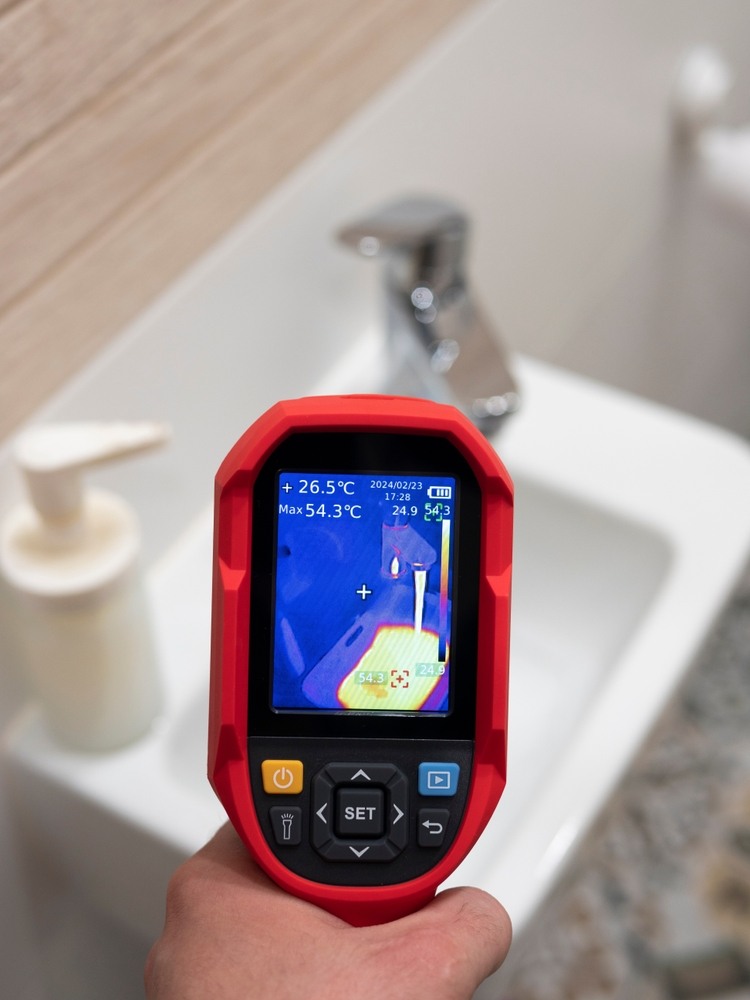
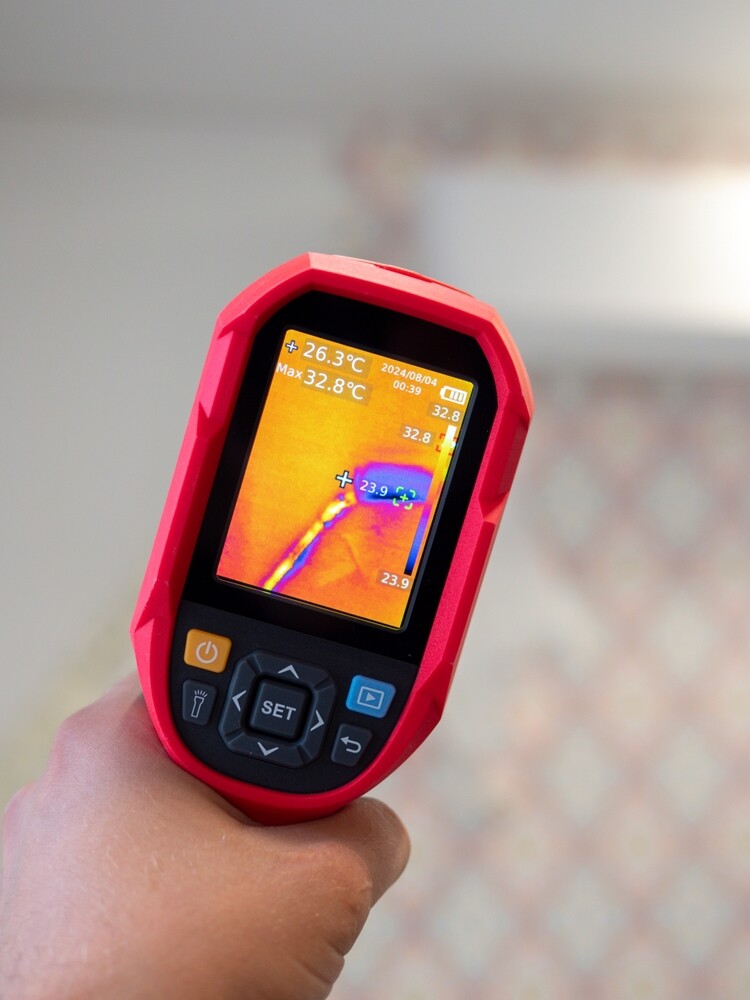
We use FLIR thermal imaging cameras to detect temperature differences on wall and floor surfaces. Water from a leak often changes the surface temperature slightly compared to the surrounding dry material, and a thermal camera can pick up that difference even when nothing is visible to the naked eye. This gives us a starting point for narrowing down the leak’s general location before any further testing.
Acoustic Leak Detection
Devices like the Jacob’s Sniffer 430 and Fisher leak detectors listen for the sound of water escaping under pressure. Even a small leak inside a pressurized supply line creates a distinct acoustic signature, and these tools amplify that sound so a technician can pinpoint the source with much more precision than listening alone would allow.
LeakTronics Equipment
We also use LeakTronics tools, which combine several detection methods, including acoustic sensors and tracer gas approaches, to confirm a leak’s exact location. Combining detection methods matters because no single tool works perfectly in every situation. A slab leak, a leak inside a wall cavity, and a leak under a crawl space each respond differently depending on the pipe material, the surrounding structure, and how deep the pipe sits.
What Happens After a Leak Is Located
Once a leak’s exact position is confirmed, the repair itself becomes far more targeted. Instead of opening a large section of drywall or breaking up a wide area of slab, the work can focus on the specific spot where the pipe has failed. This keeps repair costs and drywall or flooring replacement to a minimum compared to an exploratory approach.
For commercial properties in particular, this matters for keeping a building operational during repairs. A restaurant, retail space, or office does not need to shut down a large area if the leak location is already confirmed before any work begins.
Local Considerations for Calhoun, GA Properties
Homes and commercial buildings in the Calhoun area cover a wide range of ages and construction types, from older properties with original plumbing to newer builds. Older supply lines, particularly galvanized steel or aging copper, are more prone to internal corrosion over time, which can eventually lead to pinhole leaks inside wall cavities. Georgia’s humid climate also means that once moisture is trapped inside a wall or under flooring, conditions are favorable for mold growth if the leak goes unaddressed. Slab movement from soil conditions can also stress buried plumbing lines over the years, which is one reason slab leaks are a recurring concern for property owners in this region.
Signs It Is Time to Call a Plumber
If you notice a water bill that does not match your usage, a warm or damp spot on flooring, a musty smell that will not go away, or the sound of running water when every fixture is off, it is worth having a professional check for a slab or wall leak before it spreads further. Our leak detection services are built around confirming the exact location of a problem first, so any repair work is precise rather than a guessing game. Catching a hidden leak early, before it causes widespread structural or mold damage, is almost always simpler and less disruptive than addressing the damage after the fact.
Frequently Asked Questions
- How do I know if I have a hidden leak instead of normal high water usage?
A sudden, unexplained increase in your water bill combined with a warm spot on the floor, a musty odor, or the sound of running water are all signs that point toward a hidden leak rather than normal usage changes.
- Does non-invasive leak detection damage my walls or floors?
No. The equipment we use, including thermal cameras and acoustic detectors, locates the leak from outside the wall or slab, so there is no need to cut into surfaces to search for the source.
- How accurate is thermal imaging for finding leaks?
Thermal imaging is highly effective at narrowing down the general area of a leak by detecting temperature differences, and we typically pair it with acoustic detection to confirm the exact location before any repair begins.
- Can leak detection be done on commercial properties without shutting down the business?
In most cases, yes. Because the detection process pinpoints the leak’s location beforehand, repair work can often be scheduled around business hours with minimal disruption.
A Straightforward Next Step
Hidden leaks rarely announce themselves clearly, but they do leave clues if you know what to look for. If something feels off with your water bill, your flooring, or the air quality in a room, our team at Locklear Plumbing is ready to help. As a family-owned and operated company that is licensed, bonded, and insured, we bring the same respectful, prompt, and professional approach to every residential and commercial call. Our technicians are friendly, knowledgeable, and give honest recommendations rather than pushing unnecessary work, and we back that up with an A+ BBB rating. We offer flat rate pricing so you know the cost upfront, along with same-day service options, emergency availability, and financing options for larger repairs. Reach out to us to have your property checked with accurate, non-invasive tools before a hidden leak turns into a larger problem.

Our Services

Family Owned
and Operated

Licensed, Bonded
and Insured

Respectful
Technicians

Prompt and
Professional