
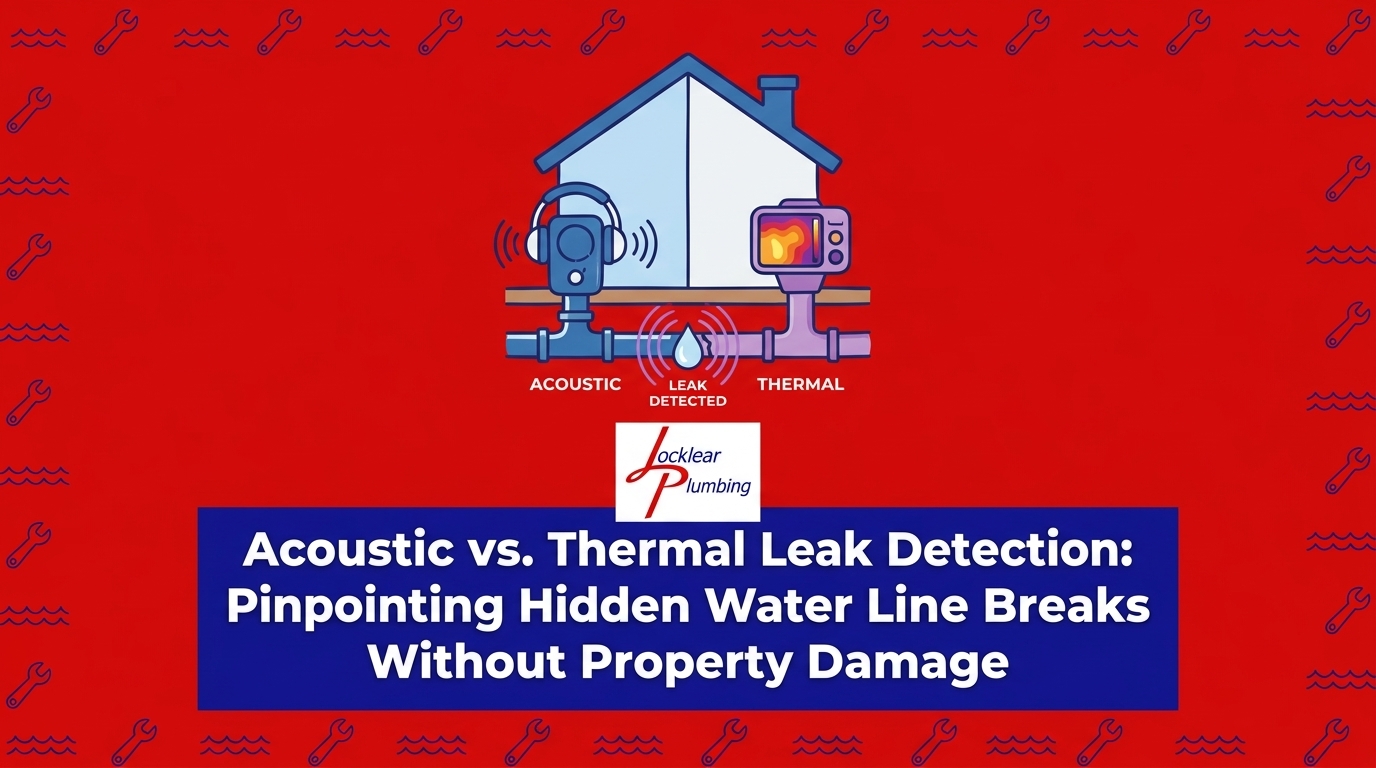
The Myth of Exploratory Digging During Fall Plumbing Prep
A common misconception about home maintenance tips and troubleshooting is that finding a hidden pipe break requires immediate, destructive digging through your floors or yard. For decades, locating a hidden water line issue meant tearing up drywall, breaking through concrete slabs, or excavating manicured landscaping just to find the source of the moisture. Unpredictable temperature drops in late fall place immense stress on aging plumbing systems, causing materials to contract and weak joints to fail. As a result, many homeowners dread the diagnostic process almost as much as the repair itself. At Locklear Plumbing, our team routinely reassures customers that finding a hidden pipe break doesn’t have to mean destroying your property.
To start identifying the root cause of your property’s moisture issues, reviewing the common types of water leaks is an excellent first step.
The modern diagnostic reality: Today’s advanced, non-invasive technology allows experts to find the exact location of a leak safely and accurately. You do not have to accept exploratory demolition as the default solution. As you finalize your mid-fall / October pre-winter prep, knowing when basic visual checks are no longer enough—and when advanced diagnostics are required—becomes a critical decision point. Addressing these hidden vulnerabilities before freezing temperatures arrive protects your property’s structural integrity and keeps your plumbing system stable through the coldest months of the year.
Why Traditional Leak Hunting Fails in Shifting Soils
The problem with surface observation: Water is notoriously deceptive. It rarely travels in a straight line from the source of the break to the surface where you finally notice the damp spot. Instead, water follows the path of least resistance, traveling along pipe exteriors, through gravel beds, or along natural soil gradients. By the time a puddle forms in your yard or a damp spot appears on your drywall, the actual break could be dozens of feet away.
The cause hidden in the ground: This deception is heavily magnified by regional soil mechanics. In our years of servicing Georgia residential homes, our technicians have seen firsthand how the state’s predominant Ultisols—dense red clay soils known for their high shrink-swell capacity—wreak havoc on underground pipes. When this clay absorbs moisture, it expands dramatically. When temperatures drop and the soil dries out during the fall transition, the clay contracts and cracks. This seasonal shifting places immense physical stress on underground plumbing lines. Furthermore, the dense, compacted nature of wet red clay can trap escaping water underground, forcing it to travel laterally rather than bubbling up to the surface.
The specialized solution: Basic homeowner troubleshooting, such as monitoring the water meter for unexplained usage, is helpful for confirming that a leak exists. However, a spinning meter dial cannot tell you where the water is escaping. Because shifting clay soils actively hide the signs of underground moisture, precise water leak detection in difficult areas requires specialized equipment. Overcoming these environmental barriers means relying on technology that reads the physical signatures of the leak—sound and temperature—rather than relying on visual guesswork.
Listening for Trouble: The Mechanics of Acoustic Leak Detection
Acoustic leak detection relies on highly sensitive ground microphones and listening discs to amplify the distinct sound of water escaping from a pressurized pipe. When a pipe breaks, the water forced through the crack creates vibrations. These vibrations travel along the pipe itself and up through the surrounding soil or concrete. For Georgia residential homes, capturing these acoustic signatures is often the fastest way to pinpoint a pressurized line break.
The acoustic detection process follows a strict, professional methodology to isolate the exact location of the failure:
- Line pressurization: If the natural water pressure isn’t creating a loud enough acoustic signature, professionals may introduce safe, inert gas (like nitrogen) into the drained water line. The gas escaping through the crack creates a much louder, higher-frequency sound that easily penetrates dense soil and concrete.
- Material calibration: The technician calibrates the listening equipment based on the pipe material. Copper pipes transmit sound waves efficiently, creating a high-frequency ringing noise that travels far along the line. PVC and PEX pipes absorb sound, creating a low-frequency “thumping” or “whooshing” sound that requires closer proximity to detect.
- Surface scanning: Using specialized headphones and a ground microphone, the technician walks the known path of the water line. The equipment filters out ambient background noise—like passing cars or wind—and isolates the frequency of the leak.
- Pinpointing the source: By measuring where the acoustic signal reaches its absolute peak decibel level, the technician can mark the exact location of the break, often within a few inches, completely eliminating the need to dig trenches to find the source.
Seeing Through the Surface: The Science of Thermal Imaging
While acoustic equipment listens for a leak, thermal imaging cameras look for the temperature anomalies created by escaping water. Infrared thermal imaging cameras do not literally “see through walls.” Instead, they detect surface temperature differentials as small as 0.1 degrees Celsius. When water leaks behind a wall, under a floor, or into a ceiling, it alters the thermal conductivity and the temperature of those building materials.
Visualizing hidden moisture: A hot water line leak will clearly show up on a thermal camera as a bright, blooming heat signature spreading across the floorboards or drywall. Cold water leaks are equally visible; the moisture cools the surrounding building materials, and evaporative cooling creates a distinct, dark thermal footprint on the camera’s display. This makes thermal imaging incredibly effective for mid-fall / October pre-winter prep, as the contrast between the cold water and the artificially heated interior of the home creates a sharp, easily readable thermal image.
Ideal use cases: Thermal detection excels in scenarios where acoustic detection might struggle. Slow seepage, unpressurized drain line leaks, and roof leaks often do not produce enough sound for acoustic microphones to catch. However, they always leave a temperature signature. By scanning the broader area, professionals can track the thermal footprint back to its origin, spotting hidden water damage before it has a chance to compromise the structural integrity of the drywall or framing.
Acoustic vs. Thermal Leak Detection: A Side-by-Side Comparison
Understanding the difference between these two technologies highlights why professional diagnostics are so effective for Georgia residential homes. Neither tool is universally superior; rather, they serve distinct diagnostic purposes based on the nature of the plumbing failure.
| Diagnostic Feature | Acoustic Leak Detection | Thermal Imaging Detection |
|---|---|---|
| Primary Mechanism | Amplifies vibrations and sound frequencies of escaping water. | Detects minute surface temperature differentials (0.1°C). |
| Best Suited For | Highly pressurized water supply lines, underground mains, and slab leaks. | Slow seepage, hot water line breaks, unpressurized drain leaks, and radiant heating. |
| Environmental Strengths | Penetrates dense concrete slabs and heavy, compacted clay soils effectively. | Quickly scans large indoor surface areas (walls, ceilings, floors) for moisture spread. |
| Limitations | Struggles with slow, dripping leaks that do not produce enough vibrational noise. | Cannot “see” deeply buried underground lines where temperature doesn’t reach the surface. |
| Property Impact | 100% non-invasive. | 100% non-invasive. |
In complex scenarios, our professionals rarely rely on just one method. We frequently use both technologies in tandem. A Locklear Plumbing technician might use a thermal camera to quickly scan a large area of flooring to find a general temperature anomaly, and then deploy acoustic microphones over that specific spot to pinpoint the exact millimeter of the pipe failure. Utilizing these advanced, non-invasive diagnostic tools is the definitive way to save property owners from the immense stress and high cost of exploratory digging.

Protecting Your Foundation from Undetected Slab Leaks
One of the most severe threats to a property’s structural integrity is a slab leak—a water line break that occurs in the pipes buried directly beneath the concrete foundation. As you complete your mid-fall / October pre-winter prep, identifying suspected slab leaks takes on urgent importance. Water naturally expands by approximately 9% when it freezes. If water is pooling beneath your concrete foundation in November, a hard freeze in December can cause that trapped moisture to expand, heaving the concrete upward and turning a minor plumbing leak into a catastrophic structural failure.
Because slab leaks are buried under inches of concrete and layers of flooring, they are impossible to locate visually. This is where the combination of acoustic and thermal diagnostics becomes mandatory. Thermal imaging can identify the warm spot on the floor where a hot water slab leak is pooling, while acoustic tools can listen through the concrete to find the exact fracture point, ensuring that only a single, small access hole needs to be made for the repair.
Recognizing the Early Warning Signs
While locating a slab leak requires professional tools, homeowners can monitor for the early symptoms. If you notice any of the following, advanced leak detection for slab leaks should be scheduled immediately:
- Unexplained spikes in water usage: Your monthly water bill jumps significantly despite no change in your family’s daily habits.
- Warm spots on the floor: Distinct, localized patches of warmth radiating through tile, wood, or carpet, indicating a hot water line failure below.
- The sound of running water: Hearing a faint hissing or rushing water sound in quiet rooms even when all faucets, toilets, and appliances are completely turned off.
Establishing Boundaries: Homeowner Prep vs. Professional Diagnostics
As temperatures begin to drop, establishing a clear boundary between safe, proactive homeowner maintenance and required professional intervention is vital. A pattern we see often at Locklear Plumbing is well-meaning homeowners attempting to diagnose or repair hidden plumbing issues without the proper training and equipment, which frequently leads to unnecessary property damage and exacerbates the original leak. For your mid-fall / October pre-winter prep, stick to a structured checklist of safe tasks.
Safe Homeowner Preparations:
- Disconnecting outdoor hoses: Remove all garden hoses from exterior bibs to prevent trapped water from freezing and bursting the pipe just inside the wall.
- Monitoring the water meter: Turn off all water sources in the house, check the meter, wait two hours, and check it again. If the dial has moved, you have a confirmed leak.
- Visual inspections: Walk the perimeter of your property and check exposed pipes in basements, crawlspaces, and utility closets for condensation, corrosion, or active dripping.
- Monitoring for symptoms: Keep a close eye on the signs of slab leaks, such as sudden drops in overall home water pressure.
The Strict Professional Boundary:
- Never attempt to excavate: Do not dig up your yard or trench through clay soils to chase a damp spot. You risk striking utility lines or damaging stable pipes.
- Never breach walls or floors: Do not cut into drywall, tear up floorboards, or break concrete to find a leak.
- Never service a struggling water heater: If your water heater is heavily scaled or struggling to maintain temperature during early cold snaps, do not attempt to dismantle or flush a compromised system yourself.
When basic visual checks reach their limit, the right next step is professional diagnostics. Finalizing your plumbing health before winter demand peaks ensures your system is ready for freezing temperatures.
Frequently Asked Questions About Non-Invasive Leak Detection
Which leak detection method is best for slab leaks?
Acoustic leak detection is generally the most precise method for pinpointing slab leaks on pressurized water lines. Because sound vibrations travel efficiently through concrete, technicians can use ground microphones to isolate the exact location of the break. However, thermal imaging is often used first to quickly identify the general area of moisture pooling before acoustic tools are deployed for pinpoint accuracy.
Can thermal imaging find underground plumbing leaks?
Thermal imaging is highly effective at finding leaks hidden behind walls, ceilings, and under indoor flooring, but it struggles with deeply buried outdoor underground pipes. The temperature differential created by the escaping water must be able to reach the surface material for the infrared camera to detect it. For deep underground yard leaks, acoustic detection or tracer gas testing is far more reliable.
When should you call a professional for a hidden water leak?
You should call a professional the moment you confirm a leak exists but cannot visually locate the source of the dripping water. If your water meter indicates continuous usage when all fixtures are off, or if you notice unexplained mold, musty odors, or warm spots on the floor, professional diagnostics are required. Waiting allows the water to cause extensive structural damage over time.
How does acoustic leak detection work?
Acoustic detection works by utilizing highly sensitive ground microphones and headphones to amplify the specific sound frequencies created by water escaping a pressurized pipe. Technicians calibrate the equipment to filter out background ambient noise and listen for the distinct “hiss” or “thump” of the leak. By tracking the decibel levels, they can locate the exact source of the sound without damaging the property.
Does shifting red clay affect the accuracy of leak detection tools?
Yes, the dense nature of Georgia residential homes’ red clay (Ultisols) can complicate leak detection because the heavy, wet clay muffles sound and traps water, forcing it to travel laterally. However, professional acoustic equipment is specifically designed to penetrate dense materials. In highly compacted soils, technicians may inject safe, inert nitrogen gas into the line, which creates a much louder, higher-frequency sound that easily cuts through the dense clay.
Finalize Your Pre-Winter Prep with Precision Diagnostics
A clear understanding of necessary fall plumbing maintenance tasks is your best defense against unexpected winter emergencies. As you complete your mid-fall / October pre-winter prep, remember that you do not have to resort to destructive guesswork to secure your plumbing system. Non-invasive tools like acoustic microphones and thermal imaging cameras prevent unnecessary property damage while delivering pinpoint accuracy.
If you suspect a hidden water line issue, or if your water heater is struggling to keep up as the temperatures drop, do not wait for a minor leak to turn into a major frozen pipe burst. Schedule professional diagnostics today to finalize your plumbing health and gain total confidence in your home’s readiness for the winter season.

Our Services

Family Owned
and Operated

Licensed, Bonded
and Insured

Respectful
Technicians

Prompt and
Professional