Some leaks never drip into a sink, stain a ceiling, or make a sound. They stay hidden under concrete, behind walls, or beneath flooring while water slowly escapes. That is where tracer gas testing can make a difference. For homeowners and business owners interested in non-invasive leak detection in Calhoun, GA, understanding how this method works can help explain why certain leaks are found faster and with less disruption.
Why Some Leaks Stay Hidden
Many plumbing leaks happen in places you cannot easily see. A pipe may have a tiny crack that releases only a small amount of water at a time. Since the leak is quiet and concealed, the warning signs can be easy to miss.
You may notice:
- A higher water bill
- Damp spots that keep coming back
- Musty odors
- Warm or cool areas on flooring
- Low water pressure
These situations often lead people to seek professional water leak detection before the problem spreads to other parts of the property.
A Closer Look at Tracer Gas Technology
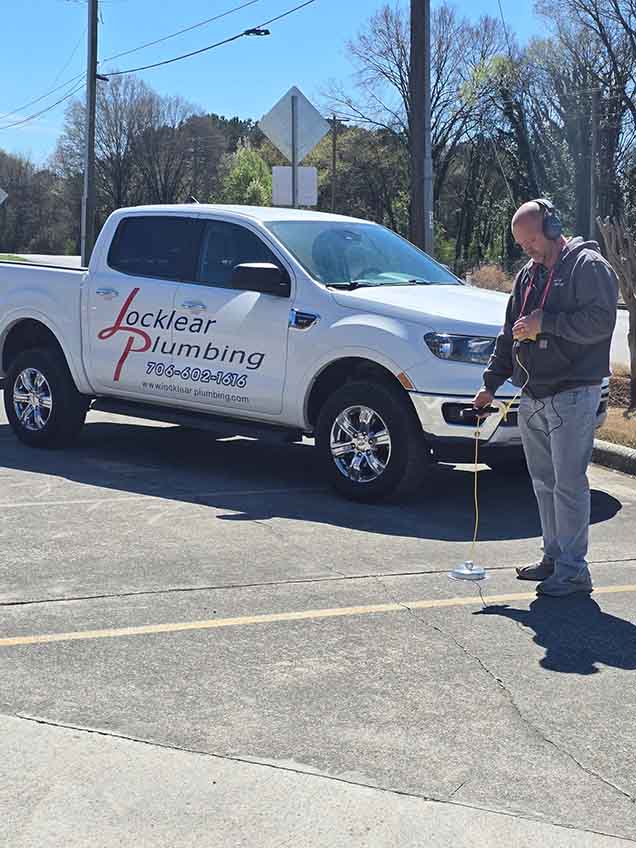
Tracer gas detection uses a blend of approximately 95% nitrogen and 5% hydrogen that is introduced into an isolated plumbing line after water is removed. Because hydrogen molecules are extremely small, they can pass through tiny openings that may not leave visible signs. A highly sensitive detector, such as the Jacob’s Sniffer 430, is then used to locate where the gas escapes.
This method is especially useful for pressurized plumbing systems, slab leaks, and leaks concealed beneath flooring or behind walls. Since the gas dissipates quickly and leaves no residue, it provides a precise way to locate difficult leaks while limiting unnecessary disruption. According to the United States Environmental Protection Agency, household leaks waste nearly one trillion gallons of water nationwide each year, making early detection an important step in reducing water loss.
How Tracer Gas Can Find What Other Methods Miss
Every leak is different. Thermal imaging and acoustic equipment are valuable tools, but they may not always provide a clear answer. Tracer gas testing can help when leaks are:
- Under concrete slabs
- Behind dense building materials
- Extremely small
- Located in areas with background noise
This is one reason our leak detection services use multiple technologies instead of relying on only one method.
Leak Detection Questions We Often Hear From Property Owners
Is tracer gas safe?
Yes. The gas used for leak testing is non-toxic and safe for use in leak detection when handled by trained professionals.
Can tracer gas find very small leaks?
Yes. It is especially useful for locating leaks that are difficult to detect with other methods.
Can this method be used in homes and businesses?
Yes. It can be used in residential and commercial plumbing systems.
Put Our Non-Invasive Leak Detection Methods to Work
When hidden leaks refuse to reveal themselves, we have the equipment and experience to investigate further. We use tracer gas testing alongside advanced technology, including FLIR thermal cameras, Jacob’s Sniffer 430, Fisher leak detectors, and LeakTronics equipment.
As a family-owned and operated company, Locklear Plumbing serves residential and commercial clients with licensed, bonded, and insured technicians who provide honest recommendations and flat rate pricing. We also offer convenient same-day appointments, emergency service, financing options, and an A+ BBB rating.
Contact us today and let our friendly team help pinpoint the source of your hidden leak with as little disruption as possible.
Our Services

Family Owned
and Operated

Licensed, Bonded
and Insured

Respectful
Technicians

Prompt and
Professional