
The Myth of the Jackhammer: Finding Leaks the Smart Way
It is a common myth that finding a hidden pipe rupture requires immediate, messy demolition, but exploring Acoustic vs. Thermal Leak Detection: How We Pinpoint Water Line Breaks Without Tearing Up Your Floor reveals a much smarter approach. You might believe that a sudden spike in your water bill means a contractor will soon be taking a jackhammer to your living room. The thought of dust coating your furniture and expensive hardwood being ripped up is enough to make anyone anxious. However, modern plumbing does not rely on blind guessing. The true challenge is not just confirming that a leak exists, but pinpointing its exact location under thick concrete before any physical work begins. For many slab-on-grade Georgia homes, avoiding unnecessary destruction is the primary goal.
To protect your property from the dangers of ignoring a water leak, our team at Locklear Plumbing relies on advanced leak detection for slab leaks to find the exact source of the problem, drawing on years of local field experience.
In the past, plumbers had very few options when dealing with a suspected leak beneath a foundation. The standard procedure often involved drilling exploratory holes through the floor or trenching along the suspected path of the pipe until the wet spot was found. This outdated method is not only incredibly disruptive to your daily life, but it also forces you to pay for extensive cosmetic repairs once the plumbing issue is finally resolved. Today, our diagnostic process changes the entire equation.
By utilizing highly specialized equipment, we can essentially see and hear through solid concrete. We do not have to guess where the water is coming from, and we certainly do not have to tear up your flooring just to take a look. Instead, we cross-reference data from multiple technological sources to narrow down the search area to a matter of inches. This precision allows us to execute surgical, minimally invasive repairs that keep your home intact and your stress levels low.
Why Water Plays Hide and Seek Under Your Foundation
Understanding why advanced technology is necessary starts with understanding how water behaves once it escapes a pressurized pipe. When a line breaks beneath your home, the water does not simply shoot straight up through the concrete. Instead, it follows the rules of physics, seeking out the easiest route to flow and pool.
The Path of Least Resistance
Water always follows the path of least resistance. Beneath your foundation, there are layers of gravel, compacted dirt, and often a plastic vapor barrier. When a pipe leaks, the water will travel horizontally along these layers, filling small voids and trenches long before it ever pushes upward into your home. This means that a damp baseboard in your hallway or a warm spot on your kitchen floor might be located ten or fifteen feet away from the actual pipe rupture. Relying solely on visual symptoms is a guaranteed way to authorize cutting into the wrong section of your slab.
Because surface symptoms are so deceptive, recognizing the common signs of slab leaks is only the first step. Once you notice an unexplained drop in water pressure, the sound of running water when all fixtures are off, or sudden pooling in your yard, professional diagnostics must take over. Visual inspections are simply never enough to justify demolition.
The Impact of Shifting Soil
The physical environment surrounding your plumbing plays a massive role in why these leaks develop and how they spread. As local experts serving GA, we see firsthand how Georgia’s heavy clay soils expand and contract significantly with seasonal moisture and temperature changes. This movement shifts foundations and places immense, uneven stress on aging underground water lines. This is especially true in the early fall when shifting ground temperatures can exacerbate hidden leaks—a pattern we see often as the seasons transition.
As the soil pulls away from or pushes against the pipes, the rigid materials eventually give way, creating hairline fractures or complete separations. Because this damage occurs deep underground and is influenced by broad soil movements, tracing the resulting water flow requires tools that can look beyond the surface level.
Thermal Imaging: Seeing the Invisible Heat Map
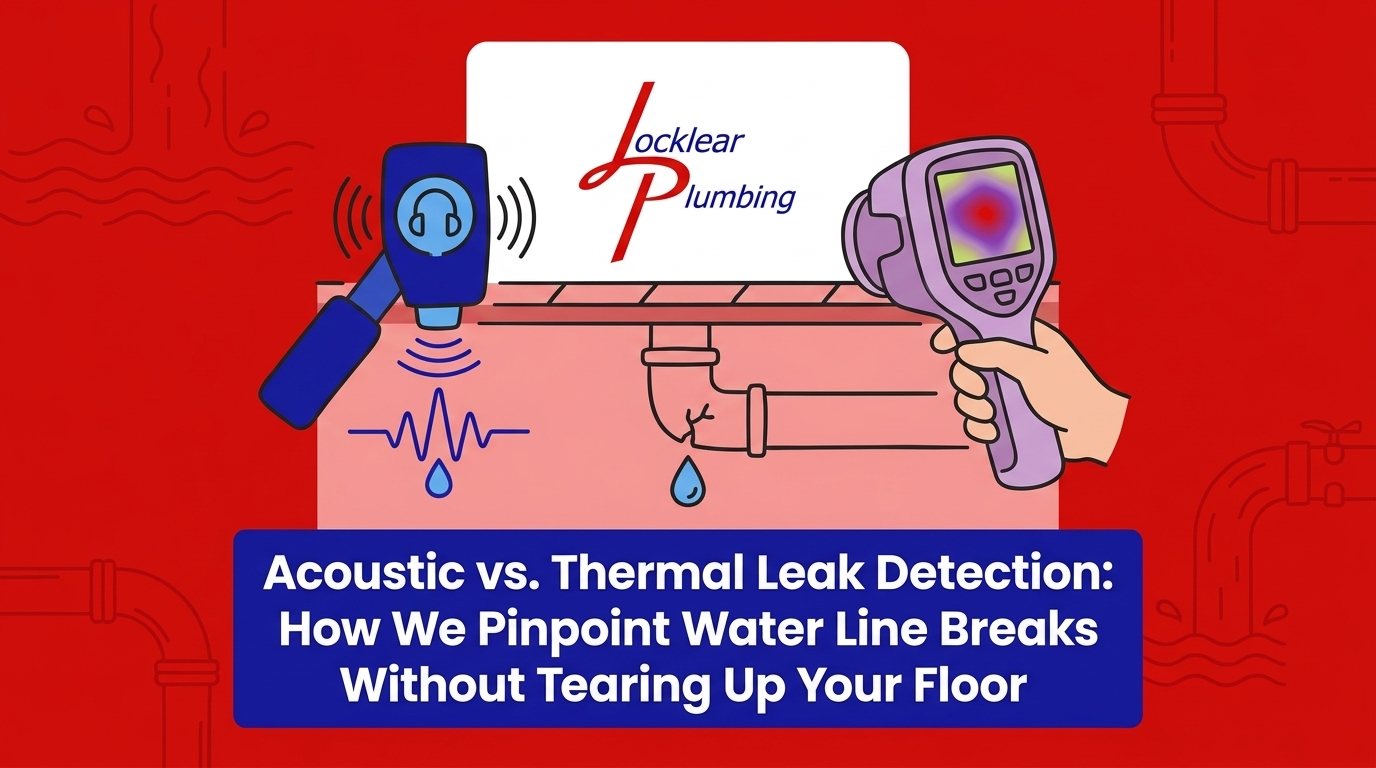
When the Locklear Plumbing team arrives at a home with a suspected hidden leak, our first goal is to map the general area of water intrusion. To do this, we utilize professional-grade thermal imaging cameras. These devices do not actually see water; instead, they see temperature.
How Infrared Cameras Detect Moisture
Thermal imaging relies on infrared technology to detect minute temperature differentials on the surface of your floors and walls. High-end diagnostic cameras can detect variations as small as 0.1 degrees Celsius. When water escapes a pipe and saturates the surrounding concrete or drywall, it changes the thermal conductivity of that material. Hot water leaks will radiate heat outward, creating a bright, glowing anomaly on the camera’s screen. Cold water leaks, on the other hand, will cool the surrounding materials, appearing as distinct dark spots against the ambient temperature of the room.
This allows us to track the exact path the moisture is taking without moving a single piece of furniture or lifting a single floorboard. For homeowners interested in spotting hidden water damage before it spreads, thermal imaging provides a clear, visual map of the problem area.
Where Thermal Technology Excels
Thermal imaging is particularly powerful in specific scenarios. It is our go-to tool for:
- Hot water line leaks: The temperature contrast is stark and immediate, making it easy to track the water’s path.
- Radiant heating issues: We can view the entire grid of in-floor heating tubes to spot where the thermal pattern breaks.
- Mapping water spread: It shows us exactly how far the moisture has traveled behind drywall or under flooring, which is critical for preventing mold growth.
However, thermal imaging has distinct limitations. While it is incredible at showing us where the water is currently pooling or traveling, it does not necessarily tell us where the pipe is broken. Because water travels along the path of least resistance, a thermal anomaly might simply highlight a low spot in your foundation where water has gathered. To find the actual rupture, we must pivot from looking at heat to listening for sound, contrasting acoustic sound signatures vs thermal temperature anomalies.
Acoustic Detection: Listening for the Exact Hiss
Once thermal imaging has provided us with a general map of the moisture, we bring in acoustic leak detection equipment. This technology allows us to pinpoint the precise location of the pipe break by isolating the sound of escaping water.
Filtering Out Background Noise
When water escapes a pressurized pipe through a small crack or hole, it creates a very specific, high-frequency hissing sound. However, listening for this sound through thick concrete is incredibly difficult. A standard stethoscope would pick up every vibration in the house, from the hum of your refrigerator to a truck driving down the street.
Professional acoustic leak detectors use highly sensitive ground microphones paired with advanced frequency filters. In our daily diagnostic work across Georgia, we use these filters to tune out ambient household noise. By adjusting the frequency range, we can block out low-frequency traffic rumbles and high-frequency electrical hums, focusing purely on the distinct acoustic signature of pressurized water escaping into soil or gravel. This level of precision is why professional water leak detection in difficult areas is so highly effective.
Pinpointing the Exact Rupture
We move the ground microphone across the floor in a grid pattern, carefully listening to the variations in sound intensity. As we get closer to the actual break in the pipe, the acoustic signature becomes sharper and louder. Because sound travels outward from the source, we can trace the noise back to its absolute loudest point.
Acoustic detection excels in scenarios where:
- The general area is already known: It allows us to narrow a ten-foot moisture map down to a two-inch target.
- The leak is highly pressurized: The more pressure in the line, the clearer the sound signature.
- Pipes are buried deep: High-quality ground microphones can detect sound through multiple layers of concrete and sub-flooring.
Like thermal imaging, acoustic detection has its own limitations. If the leak is very small (a slow drip rather than a pressurized spray), it may not produce enough sound to be easily detected. Additionally, if the pipe is resting against certain types of resonant materials, the sound can echo, potentially confusing the exact location. This is why comparing acoustic sound signatures vs thermal temperature anomalies is the only way to ensure accuracy.
The Danger of Relying on a Single Diagnostic Tool
The most critical aspect of our non-invasive diagnostic methodology is our refusal to rely on just one tool. Using only thermal imaging or only acoustic detection frequently leads to false positives, which ultimately results in unnecessary property damage.
Our commitment at Locklear Plumbing to non-invasive diagnostics is rooted in years of saving Georgia homeowners from expensive floor and tile repairs by utilizing advanced technology first. If a plumber only uses a thermal camera, they might see a large heat signature pooling in the corner of your living room. If they immediately start breaking up the tile in that corner, they may quickly discover that the water actually originated from a pipe in the center of the room and simply flowed downhill. You are now left with a demolished corner and a leak that is still actively running.
Conversely, if a plumber only uses acoustic tools, they might follow a sound that is echoing along a hollow trench beneath the slab. Without visual confirmation of moisture, they might cut into dry concrete based on an acoustic trick.
For slab-on-grade Georgia homes, mutual verification is the only way to guarantee accuracy. We must cross-reference the data from both technologies to ensure the heat map and the sound signature align perfectly before any tools touch your floor.
Thermal vs. Acoustic: A Side-by-Side Comparison
| Feature | Thermal Imaging | Acoustic Detection |
|---|---|---|
| Primary Function | Tracking moisture and temperature changes | Pinpointing pressurized pipe ruptures |
| Best Use Case | Mapping the spread of water behind walls or under floors | Finding the exact source of the leak within a known area |
| What it Detects | Surface temperature differentials as small as 0.1°C | High-frequency hissing of escaping pressurized water |
| Primary Blind Spots | Ambient temperatures and path-of-least-resistance pooling | Background noise, echoing trenches, and very slow drips |

Our Non-Invasive Leak Detection Process
When you call Locklear Plumbing to investigate a hidden water line break, we follow a strict, methodical process designed to protect your home. We never guess, and we never start cutting until we are absolutely certain. Here is how we cross-reference acoustic sound signatures vs thermal temperature anomalies to pinpoint the problem:
- Step 1: Thermal Scanning. We begin by scanning the suspected areas of your home with high-resolution infrared cameras. We look for temperature anomalies that indicate where water is pooling or traveling beneath the slab or behind the walls. This establishes our primary search grid.
- Step 2: Acoustic Pinpointing. Once we have a thermal map of the moisture, we deploy our ground microphones. We methodically sweep the mapped area, using frequency filters to tune out household noise and isolate the exact hiss of the broken pipe.
- Step 3: Cross-Referencing Data. This is the most crucial step. We compare the loudest acoustic point with the origin point of the thermal anomaly. If the two data points align, we have successfully pinpointed the leak. If they do not align, we continue our diagnostics until we find the true source.
- Step 4: Surgical Repair. Only after the location is verified by both technologies do we discuss repair options. Because we know exactly where the pipe is broken, we can execute a minimally invasive repair, often requiring only a single, small access point rather than widespread demolition.
Frequently Asked Questions About Non-Invasive Leak Detection
What is the best way to find a water leak under concrete?
The best way to find a water leak under concrete is by using a combination of thermal imaging and acoustic detection. This dual-technology approach ensures that plumbers are not just guessing based on surface moisture. By mapping the water’s path with heat and pinpointing the rupture with sound, professionals can locate the exact break without unnecessary demolition.
How do plumbers find leaks without breaking floors?
Plumbers find leaks without breaking floors by utilizing non-invasive diagnostic tools that see and hear through solid materials. Infrared cameras detect the temperature changes caused by hidden water, while highly sensitive ground microphones listen for the pressurized hiss of the escaping water. Together, these tools allow a plumber to pinpoint the leak’s exact location before any physical cutting is required.
Is thermal imaging or acoustic leak detection better?
Neither technology is inherently better; they are complementary tools that serve different diagnostic purposes. Thermal imaging is excellent for mapping the overall spread of moisture, while acoustic detection is superior for pinpointing the exact location of the pipe rupture. Using them together prevents the false positives that occur when relying on just one method.
Can thermal imaging see leaks behind walls?
Yes, thermal imaging can effectively see the evidence of leaks behind walls. While the camera cannot see through the drywall to view the actual pipe, it can detect the slight temperature drop caused by water saturating the insulation and framing. This allows plumbers to track the moisture back to its highest point of origin.
How accurate is acoustic leak detection?
When operated by a trained professional, acoustic leak detection is incredibly accurate, often pinpointing a leak within a few inches. The equipment uses advanced frequency filters to tune out ambient background noise, allowing the technician to focus purely on the sound of the escaping water. However, its accuracy is highest when cross-referenced with thermal data.
Why do early fall temperature shifts cause slab leaks?
Early fall temperature shifts cause the ground to expand and contract rapidly, which places immense stress on underground plumbing. This is especially true in early fall when shifting ground temperatures can exacerbate hidden leaks, causing rigid pipes to fracture or separate at the joints. As the soil moves, it pulls and pushes against the water lines buried beneath your foundation.
Protect Your Floors With Pinpoint Accuracy
Guessing is never a valid strategy when it comes to the safety of your home’s foundation and expensive flooring. For slab-on-grade Georgia homes, our technicians at Locklear Plumbing rely on a dual-verification process to ensure that we find the exact source of your hidden plumbing issues without causing unnecessary destruction. If you suspect a hidden pipe rupture, scheduling advanced leak detection for slab leaks provides the clear, professional answers you need to protect your property.

Our Services

Family Owned
and Operated

Licensed, Bonded
and Insured

Respectful
Technicians

Prompt and
Professional