
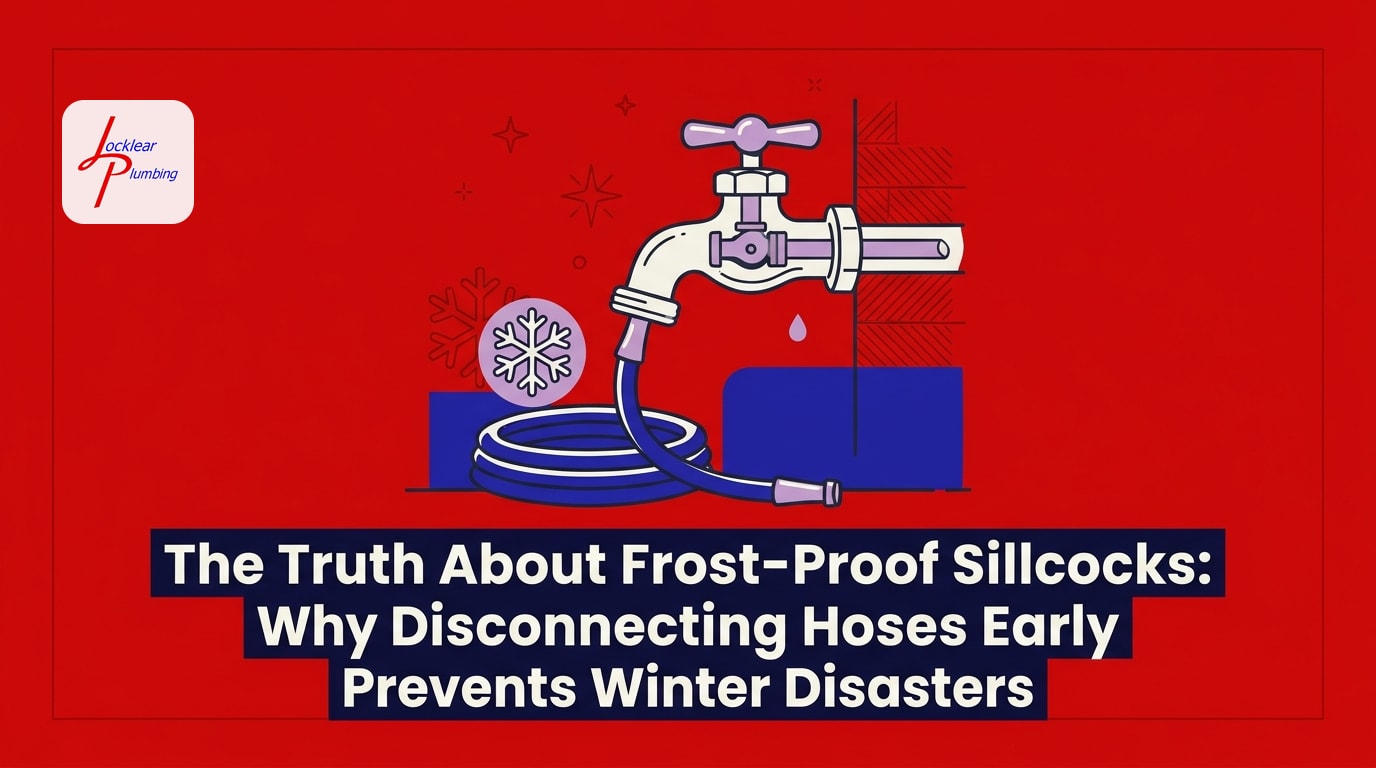
The November Freeze: Why Modern Faucets Still Fail
November pre-winter weather is settling over Georgia, meaning it is time to prioritize your outdoor hose bib winterization before the first sudden temperature drop catches your plumbing off guard. The transition into late fall often brings highly unpredictable weather patterns to our region. You might enjoy a perfectly mild afternoon working in the yard, only to have a harsh, freezing wind roll in overnight. This rapid shift is exactly when unprotected homes sustain the most water damage.
One of the most dangerous misconceptions modern homeowners hold is the belief that installing a frost-proof sillcock means they never have to think about winter maintenance again. The label “frost-proof” sounds like a permanent guarantee against freezing temperatures, leading many people to leave their garden hoses securely attached to the side of the house year-round. Unfortunately, this single oversight is the leading cause of preventable outdoor plumbing failures.
Leaving a garden hose connected during the first freeze completely neutralizes the built-in protections of a modern outdoor faucet. When you understand how these fixtures actually operate behind your walls, it becomes clear why proactive winterization is the most reliable method for keeping your property safe. To keep your home protected, we recommend reviewing a comprehensive plumbing maintenance checklist and taking the necessary steps for preventing burst pipes.
The Hidden Mechanics: How a Frost-Proof Sillcock Actually Works
To understand why your outdoor plumbing remains vulnerable even with modern upgrades, you have to look past the exterior spout. A frost-proof sillcock looks very similar to a traditional outdoor faucet from the outside, but its internal mechanics are entirely different. Traditional faucets house their shut-off valve right at the exterior wall. When you turn the handle, the water stops flowing exactly where the handle is located—leaving water sitting right at the freezing exterior of your home.
A frost-proof sillcock solves this problem through a specialized long-stem design. Instead of stopping the water at the exterior wall, the handle connects to a long internal rod that extends 6 to 12 inches back into your home’s heated envelope. When you turn the handle off outside, the actual shut-off point closing the water line is safely tucked inside your warm basement, crawlspace, or interior wall cavity.
Because the water is stopped deep inside the warm house, the remaining section of the pipe extending to the outside is supposed to be completely empty. This design relies entirely on a simple, unobstructed drainage process. Once the valve closes, any residual water left in that 6- to 12-inch chamber flows out of the front spout, leaving the exposed pipe dry and safe from freezing temperatures. This system works beautifully—but only if gravity can do its job and the exit path remains entirely clear.
The Anatomy of a Frost-Proof Faucet
Understanding the specific components of this fixture helps clarify why maintenance is still required. Every frost-proof sillcock relies on three primary elements working in harmony:
- The exterior handle and spout: This is the only part you see. It controls the flow but does not actually stop the water at this location. It is angled slightly downward to encourage gravity drainage.
- The internal stem and washer: This long copper or brass rod connects the exterior handle to the interior valve. It spans the gap between the freezing outside air and the warm inside air.
- The interior shut-off point: Located deep within the warm wall cavity, this is where the rubber washer presses against the valve seat to hold back your home’s pressurized water supply.
| Feature | Traditional Faucet | Frost-Proof Sillcock |
|---|---|---|
| Valve Location | Right at the exterior wall | 6 to 12 inches inside the home |
| Residual Water | Stays in the exterior fixture | Drains out automatically (if clear) |
| Freeze Vulnerability | High (requires heavy insulation) | Low (unless drainage is blocked) |
| Winter Prep | Must be drained and heavily covered | Hose must be disconnected to drain |
The Fatal Flaw: Trapped Water and Expanding Ice
The entire frost-proof system falls apart the moment a garden hose is left attached to the spout. When a hose is screwed onto the threads, especially if the hose has a closed spray nozzle on the other end or is full of water, it creates an airtight seal. This seal completely blocks the sillcock’s drainage path. Instead of flowing out harmlessly, the residual water gets trapped inside that 6- to 12-inch chamber that bridges your warm interior and the freezing exterior.
When the temperature drops below freezing, the water trapped inside the exterior portion of the sillcock begins to freeze. Here is the critical mechanical failure: water expands by approximately 9% when it turns into ice. This expansion creates immense, unavoidable pressure inside the copper or PEX piping. Because the ice forms from the outside in, it creates an ice plug at the spout. As the freezing continues backward into the house, the expanding ice has nowhere to go. It pushes violently against the water trapped between the ice plug and the closed interior shut-off valve.
How an attached hose destroys a frost-proof sillcock: When a hose is left connected, it traps residual water inside the faucet’s freezing zone, preventing the built-in drainage system from working. As temperatures drop, the trapped water freezes and expands by 9%, creating immense pressure that cannot escape out the front. This forces the expanding ice backward, ultimately rupturing the pipe deep inside the home’s wall cavity.
Why the Pipe Bursts Inside Your Wall
Many homeowners assume that if an outdoor faucet freezes, it will simply crack the metal spout on the outside of the house. Unfortunately, because of how a frost-proof sillcock is designed, the damage is almost always internal. The weakest point under the pressure of expanding ice is usually the thin copper tubing just behind the shut-off valve, deep inside your wall.
When the pressure exceeds the tensile strength of the metal, the pipe splits open. The rupture occurs entirely hidden from the outside world. The “frost-proof” label cannot overcome the basic physics of trapped, freezing water. As long as the hose is attached, you have effectively turned a highly engineered, freeze-resistant fixture back into a vulnerable, water-filled pipe exposed to the elements.

The Georgia Climate Trap: Unpredictable Temperature Swings
Homeowners in northern climates are accustomed to winterizing their homes early because they expect sustained, deep freezes that last for months. In contrast, Georgia’s winter climate presents a unique hazard: drastic, unpredictable temperature swings. These sudden shifts lull homeowners into a false sense of security, making it incredibly easy to forget about outdoor maintenance until it is too late.
During a typical November pre-winter transition, it is incredibly common to experience a beautiful, 60-degree afternoon. You might use the garden hose to wash the car, water late-season plants, or spray down the driveway. Because the weather feels so mild, disconnecting the hose and storing it away feels unnecessary. However, Georgia weather can easily plunge below freezing overnight as a sudden cold front moves through.
These sudden, infrequent freezes catch unprepared plumbing completely off guard. By the time you wake up and see frost on the lawn, the water trapped inside your sillcock has already frozen solid. Because there is rarely a prolonged warning period before the first hard freeze hits our region, early preparation is absolutely essential. Waiting for the weather report to announce a freeze warning is a risky strategy; the best defense is to disconnect all hoses well before the temperatures begin their seasonal rollercoaster.
The Danger of Mild Afternoons
The real danger of Georgia’s climate isn’t just the cold—it is the rapid fluctuation. When plumbing experiences rapid freeze-thaw cycles, the stress on the metal compounds. A pipe might barely survive a light freeze on Tuesday, only to weaken and finally burst during a slightly harder freeze on Thursday. Treating November as your absolute deadline for winterizing outdoor fixtures removes this variable entirely, ensuring your home is protected regardless of how wild the overnight temperatures get.
The Spring Surprise: Why the Damage Stays Hidden All Winter
One of the most insidious aspects of a burst frost-proof sillcock is that you usually won’t know it happened until months later. Because the pipe ruptures behind the closed interior valve, water does not actively leak out during the winter months. The valve is doing its job, holding back your home’s water supply, while the split pipe sits quietly in the wall cavity just waiting to be used.
This leads to what plumbing professionals call the “spring surprise.” When the weather finally warms up in March or April, you head outside to water the garden or wash the patio. You turn the handle on the frost-proof sillcock, expecting water to flow out of the spout. Instead, turning the handle opens the interior valve, sending highly pressurized water rushing directly into the split section of the pipe.
Because the rupture is inside the wall, the water violently floods your interior wall cavity, soaking insulation, ruining drywall, and pooling on your floors or in your crawlspace. A problem that occurred during a November pre-winter freeze suddenly becomes a catastrophic indoor flood in the spring. If you want to learn more about how to spot these hidden issues early, we highly recommend reading about fall winterization and hidden leaks.
The Compounding Cost of Secondary Damage
The initial burst pipe is only a fraction of the actual damage. When water floods an interior wall cavity, the secondary damage compounds rapidly:
- Structural rot: Wooden studs and floor joists that remain soaked will eventually begin to warp and rot, compromising the structural integrity of the home.
- Mold and mildew growth: Dark, damp wall cavities are the perfect breeding ground for toxic mold, which can begin growing within 24 to 48 hours of a leak.
- Electrical hazards: Water running through walls often encounters electrical wiring, outlets, and junction boxes, creating severe fire and shock hazards.
- Insulation failure: Fiberglass insulation loses its thermal resistance entirely when wet, driving up your heating and cooling costs long after the leak is stopped.
Stressing the importance of identifying plumbing vulnerabilities before the damage compounds over months cannot be overstated. A simple five-minute task in the fall saves immense frustration in the spring.
Your Pre-Winter Outdoor Plumbing Checklist
Transitioning your home for the colder months doesn’t have to be complicated, but it does require attention to detail. Providing a highly actionable, step-by-step seasonal checklist helps ensure you don’t miss any critical vulnerabilities. Follow these steps every November pre-winter season to properly secure your outdoor plumbing.
- Disconnect, drain, and safely store all garden hoses: This is the single most important step you can take. Unscrew every hose from every outdoor spigot. Drain all the water out of the hoses by elevating one end and walking the length of it. Coil them loosely and store them in a garage or shed where they are protected from the elements.
- Inspect all outdoor faucets for slow drips or leaks: Turn the faucet on and off. Once closed, watch the spout for several minutes. If you notice a slow, persistent drip, you have a failing internal washer. A dripping frost-proof sillcock will slowly fill with ice over the winter, eventually bursting the pipe even without a hose attached. This requires professional attention before freezing weather arrives.
- Identify your specific fixture type: Look closely at your outdoor faucets. Traditional bibs usually have the handle sitting parallel to the wall and require heavy insulated covers. Frost-proof models typically sit perpendicular to the wall, with a longer spout body and a slightly angled handle. Knowing what you have dictates how you protect it.
- Locate your home’s interior shut-off valves: In the event of a plumbing emergency, you need to know exactly how to turn off the water to your home. Locate your main water shut-off valve, clear away any boxes or debris blocking it, and ensure the handle turns smoothly. Being prepared saves precious minutes if a pipe ever does burst.
Taking these steps early is the best way to prevent plumbing problems this winter, giving you peace of mind as the temperatures begin to drop.
Do Frost-Proof Faucets Need Insulated Covers?
Homeowners often ask if they still need to install foam or hard plastic insulated covers over their frost-proof models. The short answer is that while not strictly necessary for true frost-proof models in good working condition, covers provide an excellent extra layer of protection against extreme wind chill. They help block freezing drafts from penetrating the exterior wall where the pipe enters the house.
“An insulated cover is a great secondary defense, but it is completely useless if a hose is still attached to the faucet underneath it.”
If you choose to use insulated covers, ensure they fit snugly against the brick or siding to create a proper thermal seal. Just remember: removing the hose is non-negotiable.
When to Consult a Professional for Winter Readiness
While disconnecting hoses and applying insulated covers are simple tasks any homeowner can perform, some winterization steps require licensed professional expertise. If you discover during your inspection that your frost-proof sillcock is leaking, dripping, or failing to shut off completely, do not attempt to force the handle or disassemble the fixture yourself. Repairing a leaking frost-proof sillcock or replacing a burst pipe involves working with pressurized water lines deep inside your walls, which requires specialized tools and professional knowledge.
Additionally, if your home still relies on older, traditional outdoor faucets, fall is the perfect time to discuss upgrading to modern frost-proof models. Upgrading before winter provides superior protection and eliminates the yearly hassle of manually draining lines and hoping your exterior insulation holds up against the cold.
At Locklear Plumbing, we focus on transitioning homeowners from reactive emergency thinking to proactive, preventative education. A comprehensive seasonal plumbing inspection by a licensed professional can catch hidden vulnerabilities—like failing pressure reducing valves, aging water heater elements, or dripping sillcocks—long before the cold hits. Leveraging local plumbing expertise ensures your home is truly ready for whatever the Georgia winter brings.
Secure Your Home’s Plumbing Before the Cold Hits
Understanding exactly how a frost-proof sillcock works is the absolute key to preventing devastating winter water damage. These modern fixtures are incredibly effective at keeping your pipes safe, but they rely entirely on your diligence to keep their drainage paths clear. The simple, five-minute action of disconnecting your hoses early in the November pre-winter season is the most powerful defense you have against catastrophic interior flooding.
Don’t let a mild afternoon trick you into leaving your plumbing vulnerable to a sudden overnight freeze. Take a walk around your property today, unscrew every hose, and inspect your fixtures for leaks. If you find any dripping faucets, or if you want the peace of mind that comes with a thorough professional inspection, reach out to a licensed plumber to ensure your home is fully prepared for the winter weather ahead.
Frequently Asked Questions
What happens if you leave a hose connected in freezing weather?
Leaving a hose connected traps water inside the outdoor faucet and prevents it from draining properly. When temperatures drop below freezing, this trapped water turns to ice and expands by about nine percent. This extreme pressure pushes backward into the home, eventually causing the copper or PEX pipe to burst inside the wall cavity.
Do I need to cover my outdoor faucet if it is frost free?
While true frost-free faucets do not strictly require insulated covers to function safely, using one adds a valuable layer of protection. Covers help block extreme wind chill from penetrating the gap where the pipe enters your home’s exterior wall. However, an insulated cover will not protect a frost-free faucet if a garden hose is still attached to it.
At what temperature do outside faucets freeze?
Outside faucets generally begin to freeze when the ambient temperature drops to 28 degrees Fahrenheit or lower for a sustained period of several hours. However, the exact freezing point depends on factors like wind chill, the location of the faucet on the house, and how well the surrounding wall is insulated. In Georgia, sudden overnight drops below freezing are enough to damage unprotected, water-filled pipes.
How do you winterize a frost free hose bib?
The most critical step to winterize a frost-free hose bib is to completely disconnect any garden hoses, splitters, or timer valves from the spout. Once disconnected, turn the faucet on and off once to ensure any residual water drains out of the internal chamber. Finally, inspect the spout for a few minutes to confirm there are no slow drips indicating a failing internal washer.
Why did my frost-proof faucet burst inside the house?
Your frost-proof faucet likely burst inside the house because water was trapped in the exterior portion of the pipe, usually due to an attached hose or a failing internal washer. When this trapped water freezes and expands, the ice pushes backward against the closed interior shut-off valve. The pressure eventually ruptures the weakest point of the pipe, which is located 6 to 12 inches deep inside your wall cavity.
Is it too late to disconnect my hose if the water already froze?
If the water inside the hose and faucet has already frozen solid, do not attempt to forcefully unscrew the hose or use boiling water to thaw the metal, as this can cause immediate cracking. Wait for the afternoon temperatures to rise above freezing so the ice naturally thaws, then disconnect the hose immediately. Once disconnected, have a professional inspect the line to ensure the pipe didn’t stretch or fracture during the freeze.

Our Services

Family Owned
and Operated

Licensed, Bonded
and Insured

Respectful
Technicians

Prompt and
Professional