
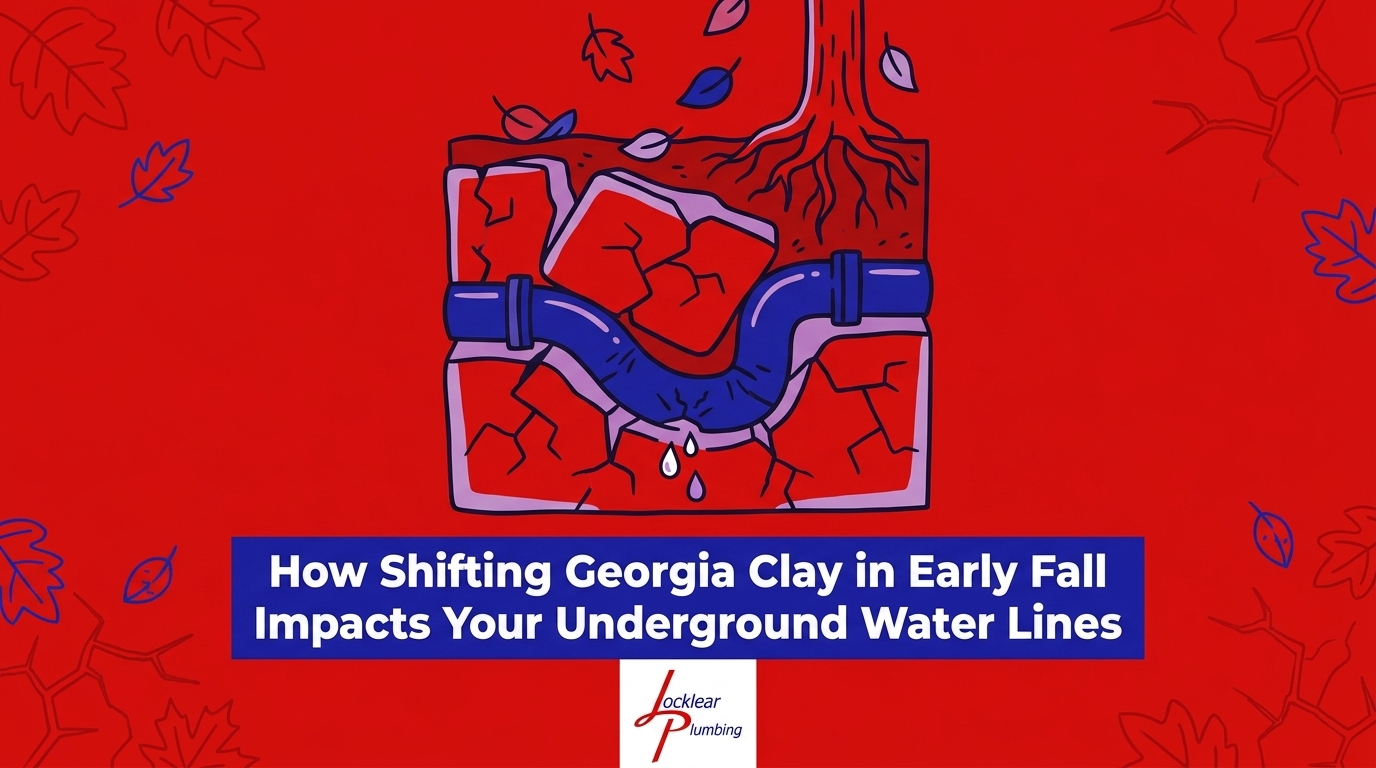
The Hidden Threat Beneath Your Lawn This September
Understanding how shifting Georgia clay in early fall impacts your underground water lines is crucial when you step out into your front yard on a crisp September morning and notice an unusually soft, soggy patch of grass—despite the fact that it has not rained in days. Or perhaps you turn on the kitchen sink and realize the water pressure has inexplicably dropped. When dealing with sudden, hidden leaks in your plumbing, the first instinct for many homeowners is to wonder if a stray freeze caught them off guard. But the truth is, the most destructive force acting on your plumbing right now is not cold weather. It is the shifting, contracting earth right beneath your feet. Navigating the early fall transition from wet summer to dry conditions in Georgia creates immense pressure points on older plumbing systems. Recognizing this seasonal threat is the first step in protecting your home.
At Locklear Plumbing, our team responds to countless yard leak calls across Georgia every September. We know firsthand that if you suspect a major break has already occurred beneath your lawn, knowing when pipe repairs and replacements are necessary can save your property from extensive secondary damage.
The winter freeze misconception: There is a common misconception that underground pipes only break when temperatures plummet below freezing. While frozen water expanding inside a pipe certainly causes ruptures, the external pressure exerted by shifting soil is a massive, often overlooked threat. In Georgia, September brings a highly specific environmental context. As the region experiences a sudden drop in precipitation and humidity, the soil begins to dry out rapidly. This early fall transition from wet summer weather to much drier conditions acts as a catalyst for severe soil movement.
Setting the stage for hidden damage: Because these leaks happen underground, they remain out of sight while the damage compounds. The shifting clay quietly pulls away from your plumbing, removing structural support and creating stress fractures. By the time you notice symptoms on the surface, the structural integrity of the line has already been compromised. Recognizing this seasonal pattern allows you to stay vigilant, identify the early warning signs, and know exactly when professional intervention is required before a minor fracture turns into a catastrophic main line blowout.
The Science of Georgia Ultisols and Seasonal Soil Contraction
To understand why your plumbing is at risk, you have to look at the ground it is buried in. Georgia’s predominant soil type is classified by the USDA as Ultisols, commonly known as red clay. This soil is famous for its high-plasticity nature, meaning it dramatically changes volume based on its moisture content. In our experience working on local properties, finding and fixing breaks in this dense material requires specialized water leak detection, because the clay behaves unlike any other soil type in the country.
The sponge effect: During the heavy, consistent rains of the wet summer months, Georgia clay acts like a massive underground sponge. It absorbs water, expands significantly, and packs tightly around your buried utility lines. This expansion actually provides a firm, supportive bed for the pipes, holding them securely in place. However, this supportive environment is only temporary.
The rapid desiccation process: As the weather dries out and humidity drops in September, the clay undergoes extreme volume changes. The soil desiccates—or dries out—rapidly. As the moisture evaporates, the clay shrinks tightly together, pulling away from everything buried within it. This shrinkage is not a gentle process; it exerts thousands of pounds of pressure per square foot on buried structures. The early fall transition from wet summer to dry weather creates a violent mechanical shift beneath your lawn.
Why Fall is Harder on Pipes Than Summer
You might wonder why a dry spell in the fall is more dangerous than a hot day in July. The answer lies in the speed and consistency of the change.
- Consistent summer moisture: Even on hot summer days, regular afternoon thunderstorms and high humidity keep the deep subsoil relatively stable and expanded.
- Sudden fall dry spells: Early fall brings longer stretches of dry, lower-humidity weather. The speed of the soil contraction is what catches plumbing systems off guard. The rapid loss of moisture causes the ground to shift faster than the pipes can adapt, leading to sudden, catastrophic stress fractures.
How Shrinking Soil Physically Crushes Underground Pipes
When the scientific properties of Georgia clay meet the physical reality of your home’s plumbing, the results can be devastating. The damage does not happen because the soil is inherently bad; it happens because the soil movement fundamentally changes the physical environment around your underground piping.
Loss of structural support: As the early fall transition from wet summer conditions dries out the ground, the shrinking clay physically pulls away from your utility lines. Pipes that were once tightly hugged and supported by damp soil are suddenly left suspended in the earth. This removal of crucial structural support forces the pipe to bear the weight of the dirt above it entirely on its own.
The creation of underground voids: The shrinking soil creates empty pockets, or voids, along the trench line. When a void forms directly beneath a section of pipe, that section begins to sag or bend under the immense weight of the earth above. Over time, this sagging creates extreme tension.
Severe localized pressure points: The shifting is rarely even. One section of the yard might dry out and shrink faster than another, creating uneven settling. This uneven shifting creates severe localized pressure points, especially on older, brittle pipe materials like cast iron, galvanized steel, or aging PVC. The pipe acts as a lever, and the hardened clay acts as a fulcrum.
Snapping and separating: Under thousands of pounds of uneven pressure, something eventually has to give. The mechanical movement can cause threaded joints to separate, glued PVC fittings to crack, or older lateral lines to snap completely in half. What starts as a microscopic stress fracture quickly escalates into a full-blown underground leak.

Key Symptoms of a Hidden Yard Leak in September
Because the damage occurs feet beneath the surface, you have to rely on secondary symptoms to realize your pipes have been compromised. Knowing what to look for during an otherwise dry September can save you from an escalating water bill and severe property damage.
- Unexplained soft, soggy, or overly green patches: If it has not rained in a week, your lawn should be uniformly dry. Finding a localized patch of mud, standing water, or grass that is significantly greener and faster-growing than the rest of the yard is a primary indicator of a subterranean leak feeding the soil from below.
- Sudden, unexplained drop in household water pressure: When a main water line cracks or separates due to soil shifting, a significant volume of water escapes into the ground before it ever reaches your home. This results in sputtering faucets, weak showers, and appliances that take longer to fill.
- Continuous water meter movement when fixtures are off: This is the most definitive diagnostic sign available to a homeowner. If you turn off every faucet, appliance, and hose bib on your property, your water meter should be completely still. If the dial or digital flow indicator is still advancing, water is escaping somewhere between the street and your home.
- Unexpected spikes in the monthly water bill: A ruptured underground line runs 24 hours a day. If your September water bill arrives and shows a dramatic increase in usage that does not align with your actual household habits, shifting clay may have compromised your system.
Why Traditional ‘Dig and Find’ Fails in Hardened Fall Clay
When you discover a leak, the immediate reaction is to find exactly where the pipe is broken. Historically, this meant sending a crew out with shovels and backhoes to start digging exploratory trenches. However, our technicians at Locklear Plumbing know that in the context of the early fall transition from wet summer conditions, this outdated method is a recipe for disaster.
The density of dried clay: After weeks of dry fall weather, Georgia clay transforms from a pliable, sponge-like material into a dense, brick-like substance. It becomes incredibly hard and compacted. Attempting exploratory digging in these conditions is excessively destructive to your landscaping, hardscaping, and property.
The risk of collateral damage: Blind excavations in hardened clay require heavy force. Because the exact location of the leak is unknown, digging blindly carries a massive risk of causing further damage to already stressed pipes, striking other utility lines, or severely disrupting the root systems of mature trees.
The necessity of local expertise: Dealing with Georgia’s specific soil conditions requires specialized knowledge. Rather than tearing up a hardened yard on a guessing game, local experts rely on advanced leak detections to pinpoint the exact location of the failure non-invasively.
The Advantage of Advanced Acoustic and Thermal Imaging
Modern plumbing relies on technology, not guesswork. Advanced leak detection utilizes highly sensitive acoustic listening devices that can “hear” the exact frequency of water escaping a pipe under pressure, even through feet of dense, hardened clay. Thermal imaging cameras can detect the subtle temperature differences caused by underground water pooling. This technology offers pinpoint precision, allowing technicians to identify the exact location of the break so that only a single, targeted excavation is necessary to make the repair.
Safe Diagnostic Steps for Homeowners Before Calling a Professional
If you notice a soggy spot in the yard or experience a drop in pressure, there are safe, non-invasive diagnostic actions you can take to confirm a leak. These steps empower you to gather critical information without attempting dangerous DIY repairs.
How to check the municipal water meter:
- Step 1: Ensure absolutely no water is running inside or outside the home. Turn off the washing machine, dishwasher, sprinklers, and all faucets.
- Step 2: Locate your water meter, typically housed in a concrete or plastic box near the street or property line.
- Step 3: Carefully remove the lid and observe the dial or digital display. Look for the low-flow indicator (often a small red triangle or a spinning gear).
- Step 4: Verify if there is continuous water meter movement when fixtures are off. If the indicator is spinning, you have a confirmed leak.
Isolating the leak location: To determine if the leak is inside the house or out in the yard, locate your home’s main shut-off valve (usually near where the water line enters the foundation). Turn this valve completely off. Go back and check the meter again. If the meter has stopped moving, the leak is inside your home. If there is still continuous water meter movement when fixtures are off, the leak is in the underground line buried in the yard.
A strict warning against digging: Never attempt to dig up or expose the suspected leak area yourself. Hardened fall clay makes manual digging dangerous, and without proper utility locating, you risk striking buried electrical, gas, or telecommunication lines. Always leave the excavation to licensed professionals.
The Long-Term Impact of Unresolved Underground Leaks
Ignoring a suspected underground leak is never a safe bet. While a slightly higher water bill might seem manageable in the short term, the secondary property damage caused by continuous underground water flow is severe and expensive.
Soil erosion and foundation risks: As water continuously escapes into the ground, it further erodes the soil base beneath your property. This localized soil supersaturation compromises the structural integrity of the earth. If the leak is relatively close to your home, this supersaturation can lead to foundation settling, shifting, or cracking as the ground beneath the concrete slab washes away.
Sinkhole formation: In extreme cases, the constant flow of water hollows out large caverns beneath the topsoil. Eventually, the surface layer collapses, resulting in a sinkhole forming right in the middle of your yard.
The importance of early detection: Catching the continuous water meter movement when fixtures are off early is the most effective way to prevent cascading property damage. The faster the water flow is stopped, the less time it has to erode the soil, damage your landscaping, and threaten your foundation. Proactive spotting hidden water damage is always more cost-effective than reactive major structural repairs.
Protect Your Property from Seasonal Soil Shifts
The early fall transition from wet summer to dry weather is a natural, unavoidable force in Georgia. While you cannot stop the clay from contracting, you can control how quickly you respond to the damage it causes. Unexplained soggy patches, dropping water pressure, and a spinning meter are clear warning signs that your underground pipes are under severe stress.
If you suspect a clay-shift leak on your property, rest assured that finding the problem does not mean destroying your entire lawn. Advanced detection technology can pinpoint the exact location of the break through the dense soil, allowing for a precise, targeted repair. Take the time to check your water meter today, and if you notice continuous movement, schedule a professional inspection immediately to protect your home from cascading water damage.
Frequently Asked Questions
Can dry soil cause water pipes to break?
Yes, dry soil is a leading cause of underground pipe breaks. As soil dries out, it shrinks and pulls away from buried utility lines, removing essential structural support. This shifting creates immense pressure points that can easily snap or crack older, brittle pipes.
What happens to plumbing when clay soil dries out?
When clay soil dries out, it undergoes extreme volume contraction, pulling tightly together. This creates underground voids beneath the plumbing, forcing the pipes to bear the heavy weight of the earth above them without proper support, which frequently leads to sagging, separated joints, and severe fractures.
How do you know if your underground water pipe is leaking?
The most definitive sign is continuous water meter movement when all fixtures in the home are turned off. Other common symptoms include unexplained soggy or overly green patches in the yard during dry weather, a sudden drop in household water pressure, and unexpected spikes in your monthly water bill.
Who is responsible for underground water line repair?
In most municipalities, the homeowner is responsible for repairing the underground water service line that runs from the public water meter at the street to the house. The city or utility company is typically only responsible for the main lines in the street and the meter itself.
How do plumbers find underground water leaks in hard Georgia clay?
Professionals use advanced, non-invasive technology rather than blind digging. They rely on acoustic listening devices to hear the high-frequency sound of escaping water and thermal imaging cameras to spot temperature anomalies, allowing them to pinpoint the exact location through the hardened clay.
Why are underground leaks more common in September?
September marks the early fall transition from a wet summer to a drier, lower-humidity climate. This sudden lack of precipitation causes the saturated clay to rapidly desiccate and shrink, exerting sudden and uneven mechanical stress on buried pipes that they often cannot withstand.

Our Services

Family Owned
and Operated

Licensed, Bonded
and Insured

Respectful
Technicians

Prompt and
Professional